
 By Admin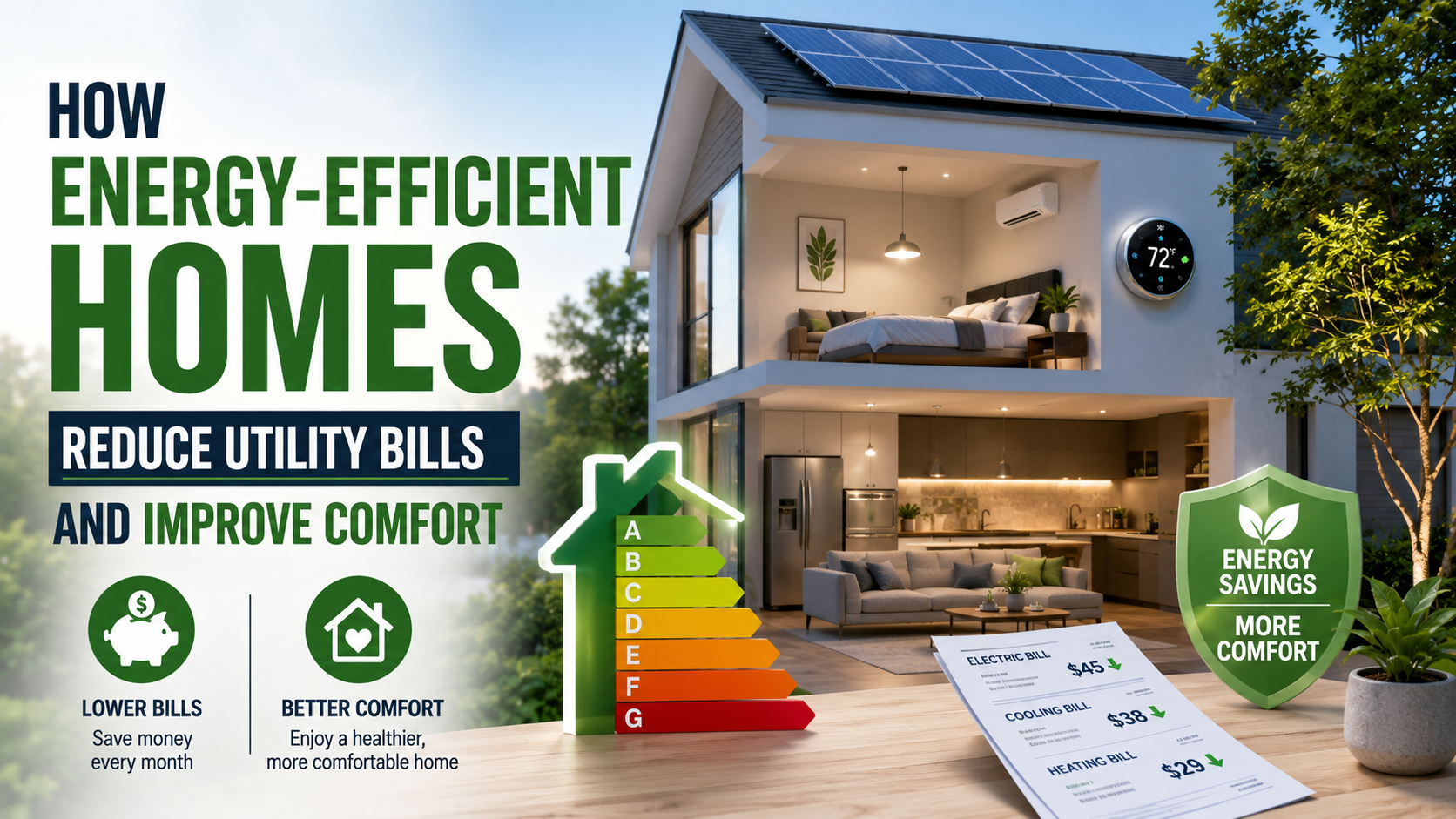
Energy efficiency has become one of the most important considerations for homeowners. Rising utility costs, changing weather patterns, and increased awareness of sustainable living have encouraged more people to look for ways to make their homes more comfortable while reducing energy consumption.
An energy-efficient home is not simply one that uses less electricity—it is a home designed to maintain comfortable indoor temperatures, improve air quality, and minimize wasted energy. From better insulation and efficient lighting to modern HVAC systems and smart home technology, every improvement contributes to lower operating costs and a healthier living environment.
This guide explains how energy-efficient homes reduce utility bills, improve everyday comfort, and create long-term value for homeowners.
What Is an Energy-Efficient Home?
An energy-efficient home uses design features, construction materials, and modern technologies to reduce unnecessary energy consumption without sacrificing comfort.
Rather than relying on heating and cooling equipment to compensate for poor insulation or air leaks, an efficient home minimizes energy demand from the beginning.
Common characteristics include:
- High-performance insulation
- Energy-efficient windows
- Smart thermostats
- Modern HVAC systems
- LED lighting
- Proper ventilation
- Air sealing
- Energy-efficient appliances
These components work together to create a balanced indoor environment that remains comfortable throughout the year.
Lower Utility Bills Through Reduced Energy Consumption
One of the most noticeable advantages of an energy-efficient home is lower monthly utility costs.
When a home requires less heating and cooling, HVAC equipment operates for shorter periods and consumes less electricity.
Energy savings often come from improvements such as:
- Better attic insulation
- Sealed ductwork
- Weatherstripping around doors and windows
- Efficient lighting
- Smart temperature controls
- Proper equipment sizing
Although the exact savings vary depending on the home and climate, reducing unnecessary energy use can significantly lower long-term operating expenses.
Improved Indoor Comfort Throughout the Year
Comfort involves more than simply adjusting the thermostat.
Energy-efficient homes maintain more consistent indoor temperatures by reducing drafts, controlling humidity, and minimizing hot or cold spots.
Benefits include:
- Even room temperatures
- Better humidity control
- Reduced temperature fluctuations
- Improved airflow
- Quieter HVAC operation
These improvements create a more pleasant living environment for everyone in the household.
Better Insulation Makes a Big Difference
Insulation plays a central role in home energy performance.
Without adequate insulation, conditioned air escapes easily while outdoor heat enters during warmer months.
Modern insulation options include:
- Spray foam
- Fiberglass batts
- Cellulose
- Mineral wool
- Rigid foam boards
Combined with effective air sealing, insulation reduces heating and cooling demand throughout the year.
High-Performance Windows Improve Efficiency
Older windows often allow heat to enter during summer and escape during winter.
Modern energy-efficient windows help maintain indoor comfort through features such as:
- Double-pane or triple-pane glass
- Low-emissivity (Low-E) coatings
- Gas-filled glazing
- Improved window frames
- Better weather seals
These upgrades reduce the workload placed on heating and cooling systems.
HVAC Systems Are the Heart of Home Comfort
Heating and cooling systems account for a significant portion of household energy use.
Modern HVAC systems are designed to deliver greater comfort while consuming less electricity.
Common efficiency improvements include:
- Variable-speed compressors
- Smart thermostats
- Zoned temperature control
- High-efficiency air handlers
- Energy recovery ventilation
- Improved air filtration
Routine maintenance helps preserve these efficiency benefits over time.
Homeowners seeking reliable hvac friendswood services often schedule seasonal inspections to ensure their heating and cooling systems continue operating efficiently before peak summer and winter demand.
Smart Thermostats Help Reduce Waste
Smart thermostats automatically adjust indoor temperatures based on occupancy and daily schedules.
Benefits include:
- Reduced unnecessary heating and cooling
- Remote temperature control
- Energy usage reports
- Learning capabilities
- Customized comfort settings
These devices help homeowners balance comfort with energy savings.
Indoor Air Quality Supports Health and Comfort
Energy-efficient homes should also provide healthy indoor air.
Modern HVAC systems improve indoor air quality by:
- Removing airborne particles
- Controlling humidity
- Increasing ventilation
- Filtering allergens
- Reducing dust circulation
Cleaner indoor air contributes to:
- Better respiratory health
- Improved sleep quality
- Reduced allergy symptoms
- Greater overall comfort
Maintaining indoor air quality is especially important because people spend a large portion of their time indoors.
LED Lighting Reduces Heat and Energy Use
Lighting choices also influence home energy performance.
LED lighting offers several advantages:
- Lower electricity consumption
- Reduced heat generation
- Longer lifespan
- Lower maintenance requirements
- Improved lighting quality
Unlike traditional incandescent bulbs, LEDs produce very little excess heat, reducing the cooling demand placed on air conditioning systems.
Air Sealing Prevents Energy Loss
Even small air leaks around windows, doors, and utility penetrations can significantly reduce energy efficiency.
Air sealing helps:
- Eliminate drafts
- Improve temperature consistency
- Reduce HVAC workload
- Increase comfort
- Lower energy bills
Common sealing materials include:
- Weatherstripping
- Caulking
- Spray foam
- Door sweeps
These relatively simple improvements often provide noticeable energy savings.
Preventive HVAC Maintenance Protects Efficiency
Even the most efficient HVAC equipment requires routine maintenance.
Preventive service typically includes:
- Replacing air filters
- Cleaning evaporator and condenser coils
- Inspecting refrigerant levels
- Testing electrical components
- Calibrating thermostats
- Cleaning condensate drains
- Evaluating airflow
Regular maintenance helps systems operate efficiently while reducing the risk of unexpected repairs.
Property owners looking for experienced hvac katy professionals frequently choose annual maintenance plans because preventive care helps maximize equipment performance and lower operating costs.
Smart Homes Create Better Energy Management
Connected home technology continues to improve residential energy efficiency.
Modern systems allow homeowners to monitor and automate:
- Heating
- Cooling
- Lighting
- Ventilation
- Security
- Energy consumption
Automation reduces unnecessary energy use while improving convenience and comfort.
Water Efficiency Complements Energy Savings
Although often overlooked, water conservation also contributes to overall household efficiency.
Examples include:
- Low-flow fixtures
- Efficient water heaters
- Smart irrigation systems
- Leak detection devices
- Water-saving appliances
Reducing hot water usage lowers both water and energy expenses.
Long-Term Financial Benefits
Energy-efficient homes provide value beyond monthly utility savings.
Benefits include:
- Higher property value
- Reduced maintenance costs
- Longer equipment lifespan
- Lower repair expenses
- Improved resale appeal
Many buyers actively seek homes with energy-efficient features because of the ongoing savings they provide.
Environmental Benefits
Reducing household energy consumption also benefits the environment.
Energy-efficient homes help:
- Lower greenhouse gas emissions
- Reduce demand on electrical grids
- Conserve natural resources
- Support sustainable communities
Small improvements made across millions of homes collectively have a meaningful impact on energy conservation.
Practical Ways to Improve Home Efficiency
Homeowners can begin improving energy performance by taking practical steps such as:
- Replacing old HVAC equipment when necessary
- Installing programmable or smart thermostats
- Upgrading insulation
- Switching to LED lighting
- Sealing air leaks
- Replacing outdated windows
- Scheduling routine HVAC maintenance
- Monitoring monthly energy consumption
Incremental improvements often lead to significant long-term savings.
Frequently Asked Questions
What makes a home energy efficient?
An energy-efficient home combines proper insulation, efficient HVAC systems, high-performance windows, LED lighting, air sealing, smart controls, and regular maintenance to reduce unnecessary energy use.
How do efficient HVAC systems reduce utility bills?
Modern HVAC systems use advanced technologies such as variable-speed motors and smart controls to maintain indoor comfort while consuming less electricity than older equipment.
Why is insulation important?
Insulation reduces heat transfer between indoor and outdoor spaces, helping maintain comfortable temperatures while reducing heating and cooling demand.
Are smart thermostats worth installing?
Yes. Smart thermostats help optimize heating and cooling schedules, reducing unnecessary energy consumption and improving overall efficiency.
How often should HVAC systems be serviced?
Most HVAC manufacturers recommend professional maintenance at least twice each year—typically before the cooling and heating seasons—to keep equipment operating efficiently.
Conclusion
Energy-efficient homes deliver far more than lower utility bills. They create healthier indoor environments, improve year-round comfort, reduce environmental impact, and help homeowners protect one of their most valuable investments.
By combining efficient HVAC systems, quality insulation, smart technology, LED lighting, and regular maintenance, homeowners can significantly reduce energy waste while enhancing everyday living. As energy costs continue to rise and sustainable living becomes increasingly important, investing in home energy efficiency remains one of the most practical and rewarding decisions property owners can make.