
 By Admin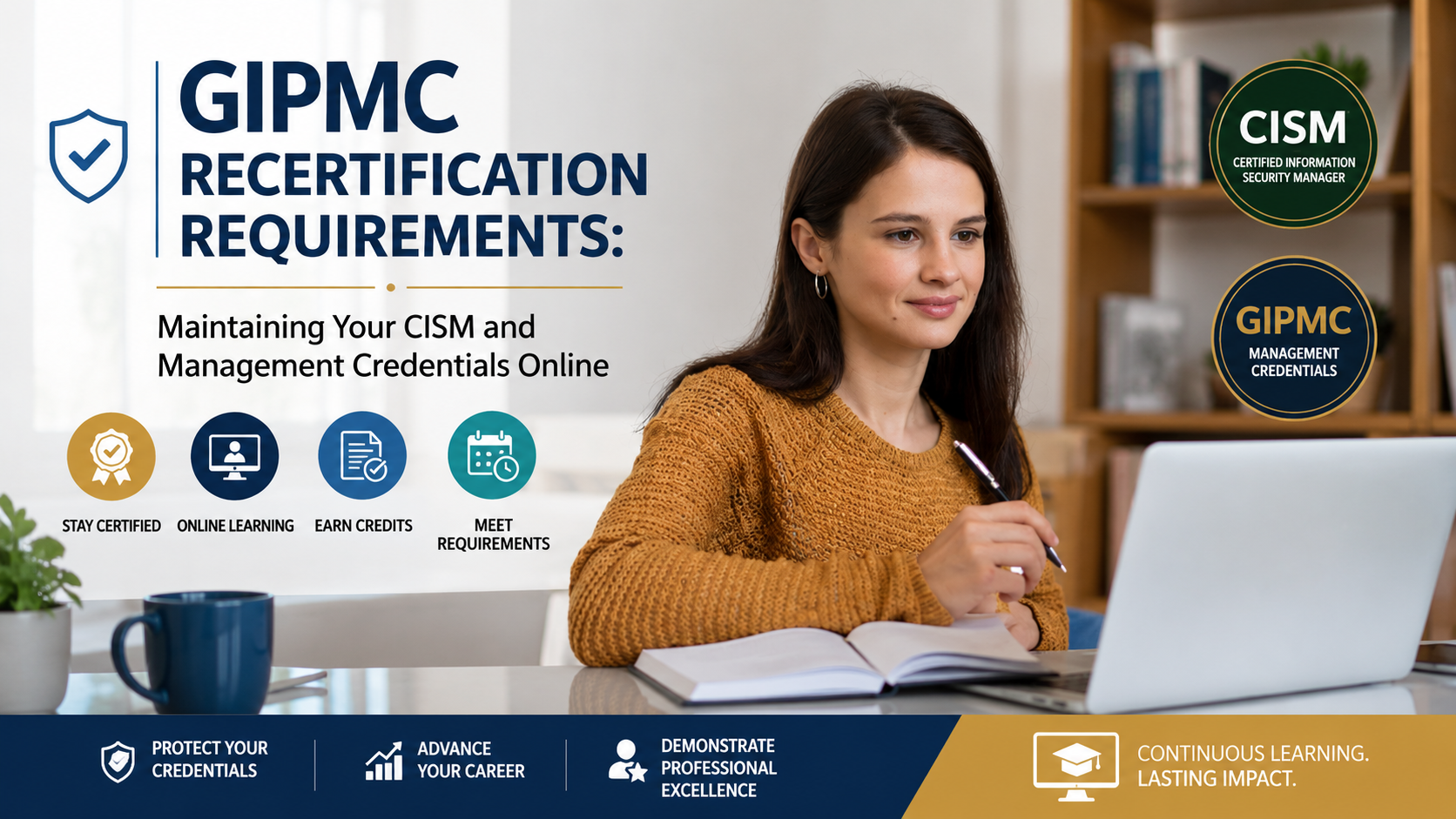
GIPMC’s CISM certification online does not come with lifetime validity, nor does any of the other management certification programs on the platform. You can keep your CISM credentials valid through periodic recertification, which may involve continuing development of your knowledge and skills.
Key Takeaways
- GIPMC credentials require periodic renewals, and certification validity depends on the certification program.
- Your CISM certification online is valid for three years from when it was awarded to you.
- Your certification renewal can involve professional development, reassessment, or competency verification.
- You should always begin the renewal process before your current credential expires.
As GIPMC’s professional management certifications are awarded with limited validity, you need to renew the certification periodically to ensure that it continues to offer value to your career profile. Hence, you must understand the key renewal terms and start the recertification process at least a few months before your credential reaches its current expiration date.
What Are GIPMC Recertification Requirements for Active Credentials?
The GIPMC recertification requirements for the management credentials vary from one program to another. Therefore, you need to have a clear understanding of what you must do to complete the recertification of your credential before its validity expires.
For certifications that require renewal, GIPMC generally identifies three key elements, including:
- Continued development: You must complete defined professional development, continue your learning, or engage in certain knowledge-refresh activities.
- Renewal assessment: You must complete a renewal assessment or professional/competency verification for certain credentials.
- Renewal application: You must submit the renewal application before the expiration date on the current certification.
For example, the Continuous Improvement Strategy Manager (CISM) certification is valid for three years from the date on which it was awarded to you. To ensure its successful renewal, you must engage in continued learning or professional development activities, a renewal assessment or competency validation where applicable, and submission before expiry.
Pro Tip: Check your individual certificate page for renewal instructions or the required number of CPD credits or hours that apply to your credential. The biggest mistake you can make is assuming that you’ll have to complete universal renewal requirements to maintain a GIPMC credential and that what works for another credential will also apply to your certification.
Which GIPMC Certifications Require Ongoing Maintenance?
Recertification/Certification renewal is not limited to one professional discipline. GIPMC has different renewal processes for certifications across industries and functions, including management, technology, governance, quality, and other certification categories.
| GIPMC Credential | Validity | Development Focus | Renewal Approach |
| CISM – Continuous Improvement Strategy Manager | 3 years | Continuing learning and improvement expertise | Development + assessment / validation + application |
| ISGM – Information Security Governance Manager | 3 years | Security governance and knowledge refresh | Professional development + renewal assessment/verification |
| AIGLA – AI Governance Lead Auditor | 3 years | AI audit and governance knowledge | CPD/audit refresh + assessment / verification |
| AAIGP – Applied AI Governance Professional | 3 years | Practical AI governance capability | Development/governance refresh + renewal verification |
| EAILC – Executive AI Leadership Certification | 3 years | Executive AI leadership development | Professional development + renewal assessment/verification |
Table: Examples of GIPMC credentials with published renewal requirements
The key is to maintain professional relevance through continuing development and complete the certification-specific renewal requirements before the expiration date approaches. This means that you should treat your management certification as an ongoing professional-development commitment and not a one-time achievement.
How Can You Renew Your GIPMC Credential Without Disrupting Your Career?
You can make the renewal process easier by treating professional development as an ongoing process instead of waiting until your expiration date approaches. To guarantee ongoing maintenance and timely recertification, you can follow a practical maintenance approach that includes:
- Keeping a detailed record of your development activities
- Maintaining evidence of relevant learning, professional development, or knowledge-refresh activities as you complete them.
- Reviewing your certification status to keep track of the awarding and expiration dates to ensure timely action.
- Completing any required verification for renewal assessment, professional verification, or competency validation before the deadline.
- Submitting the renewal application long before the expiration date.
Final Verdict: Keep Your Credential Current, Not Just Earned
You need to track your certification’s validity period and renewal requirements to ensure timely renewal and ongoing maintenance. CISM certification online holders, for example, should plan around the three-year validity period and complete the applicable development, assessment, and renewal requirements before the expiration date approaches.
The right approach to do this is quite simple: you need to track your professional development, check your program-specific requirements early, complete any required verification, and submit your renewal application on time. This will ensure that your management certification is easier to maintain, while it continues to deliver maximum professional relevance.
Do You Still Need Help Understanding Your Renewal Requirements?
Connect with a certification consultant today to determine your program-specific GIPMC recertification requirements, documentation, assessment or verification steps, and submission process before your active status is affected.