
 By Admin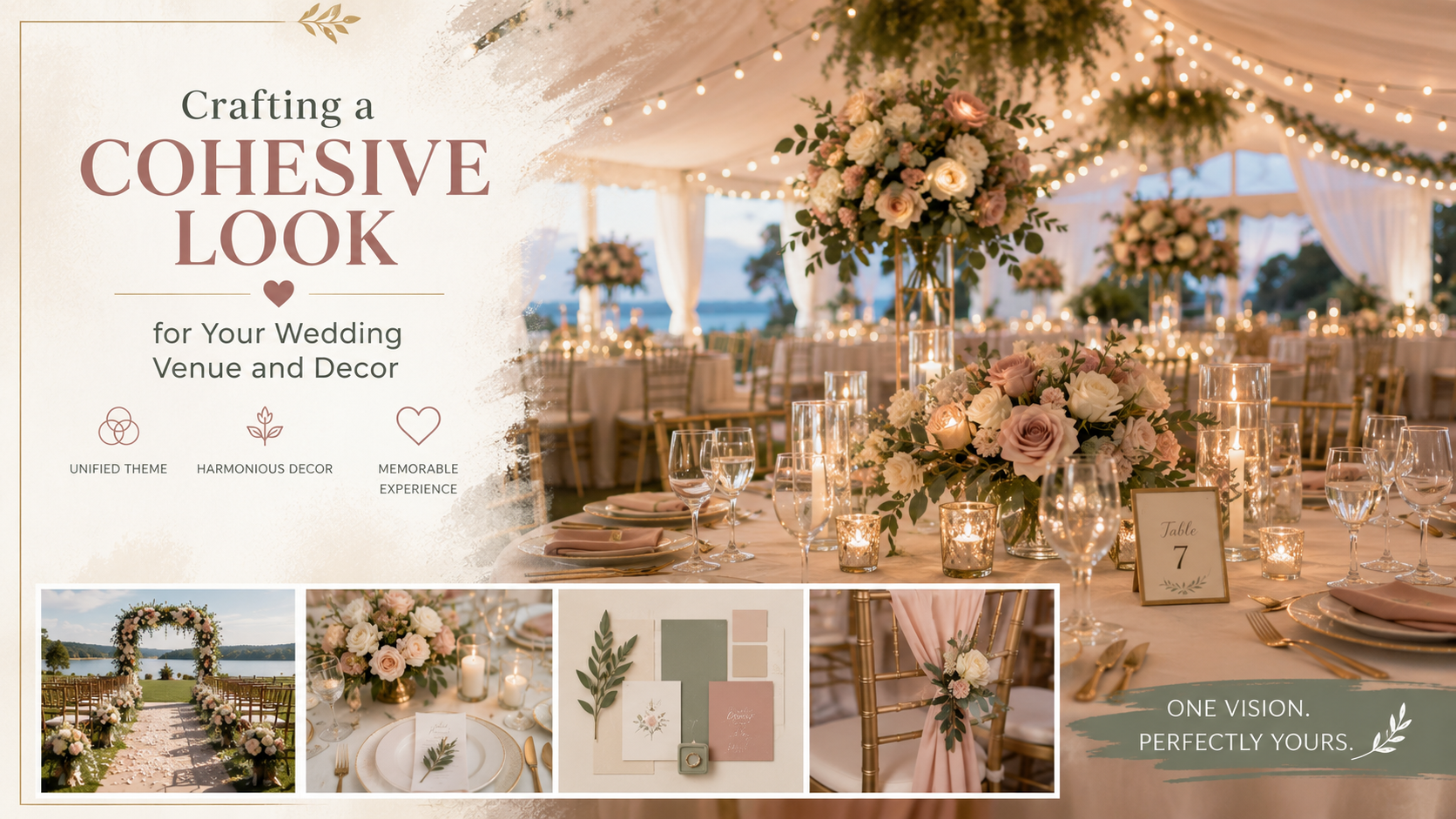
Wedding décor needs to account for existing architectural features, and the available services influence how the overall plan is organized. Developing a cohesive design involves coordinating decorative components with fixed venue features; this helps create a consistent visual arrangement. Supplied furnishings and floral services may influence reception styling, while room configurations and photography areas affect how the design extends across the venue. Here are some ways to craft a cohesive look for your wedding venue and décor:
Align Décor With the Venue
Matching décor to a wedding venue requires examining how decorative elements fit with the architectural features that remain visible throughout the event. Tall windows, original wood, and exposed brick provide established textures that influence the selection and placement of decorations. Cohesive decorating accounts for these features without obscuring the architectural details that define the interior. Exposed brick and original wood help provide unique visual details, while tall windows preserve views of the surrounding landscape from inside.
Venues with industrial and vintage details offer a guide for choosing décor that fits the existing style. An open reception layout supports different seating arrangements and guest setups, which affects where decorations can be placed. Examining the venue’s style and layout helps coordinate décor with each part of the wedding; this promotes a unified look.
Coordinate Tables, Chairs, and Linens
Tables, chairs, and linens establish the reception’s basic physical arrangement before decorative elements are added. A pre-approved table layout determines where the tables and chairs are positioned within the reception area; this fixed arrangement gives other decorative components a defined area for placement. White wedding chairs provide a consistent seating element across the reception arrangement. Tablecloths cover the tables within the established layout, creating a uniform surface for additional reception décor. Optional elements, such as mismatched china and a chandelier, introduce separate visual components that need to correspond with the established tablescape.
Integrate Florals With Décor
Some wedding venues offer all-inclusive packages; this option may combine florals with other wedding services such as catering and DJ services. Tables, chairs, and tablecloths establish the furnishings that floral arrangements need to complement. Coordinating flower colors and textures with these furnishings helps keep the reception design visually connected.
Floral selections require assessment against the reception’s existing visual palette before final choices are made. When selected floral characteristics are repeated across separate arrangements, they create continuity without requiring identical compositions. Arrangement proportions also affect how floral pieces function on reception tables, so their size and scale should correspond with the overall tablescape.
Height affects sightlines between guests, while width impacts the usable surface around place settings and other table elements. Because floral dimensions affect both visibility and available table space, selecting dimensions that suit each table keeps the arrangements integrated with the practical requirements of the reception. Month-of coordination can be helpful for confirming floral arrangements, placement, and setup details before the wedding.
Coordinate Ceremony and Reception Spaces
A unified wedding look requires visual continuity between the ceremony and reception areas. This can be achieved through:
- Connecting separate upstairs areas through curtains, allowing the spaces to remain distinct or function as one area.
- Providing two ceremony-location options within the same setting through wedding venues with a belfry wing and card room.
- Maintaining a consistent visual backdrop, as both ceremony areas provide views of nature through large windows.
- Keeping guests in place while staff handles the required chair replacement between the ceremony and reception arrangements.
- Opening the curtains between the upstairs areas so the ceremony and reception décor remain visually connected as guests move through the event.
Explore Wedding Venues
A cohesive wedding design connects the venue’s existing features with the furnishings and decorative elements added for the event. When color, texture, scale, and placement are coordinated, they create visual continuity, and consistent styling links the ceremony and reception areas. Reviewing the venue layout before finalizing décor can confirm that each element fits the available space, which supports the overall design. Schedule a venue tour today to start planning your wedding décor.