
 By Admin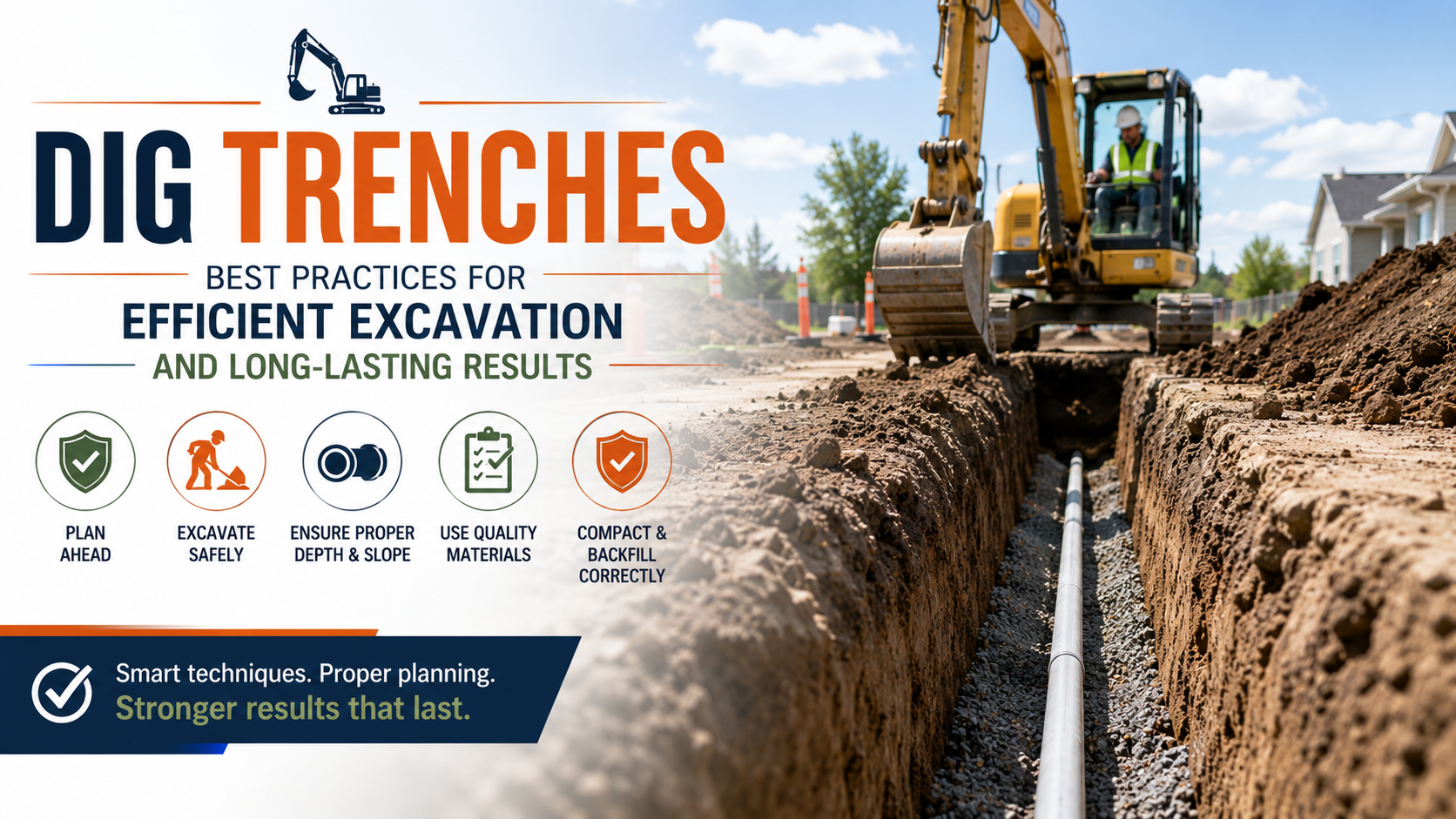
Introduction
Many construction, landscaping, and utility projects begin with one essential task: dig trenches accurately and efficiently. Whether the goal is to improve drainage, install underground lines, or prepare land for future development, properly planned trench excavation creates a strong foundation for success.
When you dig trench, careful preparation is just as important as the excavation itself. Factors such as soil type, trench dimensions, weather conditions, and project planning all influence the final result. A well-executed trench not only supports underground systems but also helps prevent future maintenance issues.
This guide explains the key steps, practical tips, and common mistakes to avoid when you dig trenches for residential or commercial projects.
Why It Is Important to Dig Trenches Correctly
Trenches serve many purposes, from directing water away from structures to housing underground utilities. Proper excavation helps ensure that these systems perform reliably over time.
Projects that require you to dig trenches include:
- Drainage installations
- Irrigation systems
- Underground utility lines
- Electrical conduit placement
- Foundation preparation
- Landscape improvements
A carefully planned trench minimizes future repairs and supports the long-term success of the project.
Planning Before You Dig Trenches
Define the Purpose
Before excavation begins, clearly identify why you need to dig trenches. Different projects require different trench depths, widths, and layouts.
For example:
- Drainage trenches often require a gradual slope.
- Utility trenches need consistent depth.
- Irrigation trenches may follow landscape contours.
Understanding the project’s purpose allows for better planning and improved efficiency.
Measure the Work Area
Accurate measurements reduce unnecessary excavation and help maintain uniform trench dimensions.
Mark the proposed trench path before starting work to keep the excavation organized and precise.
Evaluate Ground Conditions
The condition of the soil plays a major role in trench excavation.
Clay Soil
Clay retains moisture and may become heavy after rainfall. It often requires additional attention during excavation.
Sandy Soil
Sandy soil is easier to excavate but can shift more easily, making stability an important consideration.
Rocky Ground
Rocky terrain slows excavation and may require additional preparation before you dig trenches.
Knowing the soil type helps determine the most suitable excavation approach.
Preparing to Dig Trenches
Good preparation makes excavation smoother and more efficient.
Before beginning, consider these important steps:
- Remove surface debris.
- Mark trench boundaries clearly.
- Verify measurements.
- Identify underground utilities.
- Plan where excavated soil will be placed.
A well-prepared site reduces delays and creates a safer work environment.
Step-by-Step Guide to Dig Trenches
Step 1: Mark the Layout
Use stakes, marking paint, or guide lines to define the trench path.
Straight, clearly marked lines improve excavation accuracy.
Step 2: Remove Surface Material
Clear vegetation, loose soil, and obstacles before excavation begins.
This creates better visibility and improves workflow.
Step 3: Begin Excavation
As you dig trenches, maintain a consistent width and depth throughout the project.
Check measurements frequently to avoid uneven excavation.
Step 4: Shape the Bottom
A smooth and level trench bottom supports proper installation of drainage systems, utility lines, or irrigation pipes.
Consistency improves overall performance.
Step 5: Final Inspection
After excavation is complete, inspect the trench for loose soil, uneven sections, or debris before moving to the next phase of the project.
Common Uses for Trenches
There are many situations where property owners need to dig trenches.
Drainage Systems
Proper trenching directs excess water away from buildings and landscaped areas.
Utility Installations
Water, electrical, and communication lines often require underground trench systems.
Irrigation Projects
Trenches provide protected pathways for irrigation pipes that distribute water efficiently.
Landscaping
Landscape borders, retaining walls, and garden features frequently involve trench excavation.
Safety Tips When You Dig Trenches
Safety should remain a priority throughout every excavation project.
Important recommendations include:
- Keep excavation areas clean.
- Watch for unstable soil.
- Avoid excessively steep trench walls.
- Inspect trenches regularly.
- Stay aware of changing weather conditions.
Safe work practices help reduce risks while improving project efficiency.
Common Mistakes to Avoid
Even simple excavation projects can experience problems if planning is overlooked.
Avoid these common errors:
- Digging without accurate measurements
- Ignoring soil conditions
- Creating inconsistent trench depth
- Removing excessive soil
- Failing to maintain proper alignment
- Rushing the excavation process
Taking a methodical approach each time you dig trenches leads to better results.
Tips for Better Excavation
Professional-quality trenching depends on consistency and preparation.
Plan Ahead
Carefully review the excavation route before beginning work.
Work in Sections
Breaking the project into smaller sections improves accuracy and organization.
Check Measurements Frequently
Regular inspections help maintain consistent trench dimensions.
Keep the Area Organized
Managing excavated soil and materials creates a cleaner, safer workspace.
Inspect Throughout the Project
Small adjustments made during excavation often prevent larger problems later.
Benefits of Proper Trench Excavation
When you dig trenches using careful planning and proven techniques, you gain several long-term advantages:
- Improved drainage efficiency
- Better support for underground installations
- Reduced maintenance requirements
- Cleaner project execution
- Greater durability for completed systems
Quality trench excavation contributes to reliable performance for years to come.
Conclusion
Knowing how to dig trenches properly is an essential skill for many construction and landscaping projects. Success begins with careful planning, accurate measurements, and an understanding of ground conditions. By maintaining consistent trench dimensions, following safe excavation practices, and avoiding common mistakes, you can complete projects more efficiently and achieve dependable long-term results.
Whether your goal is improving drainage, installing utilities, or enhancing outdoor spaces, taking the time to dig trenches correctly helps create a stable foundation for every stage of the project.