
 By Admin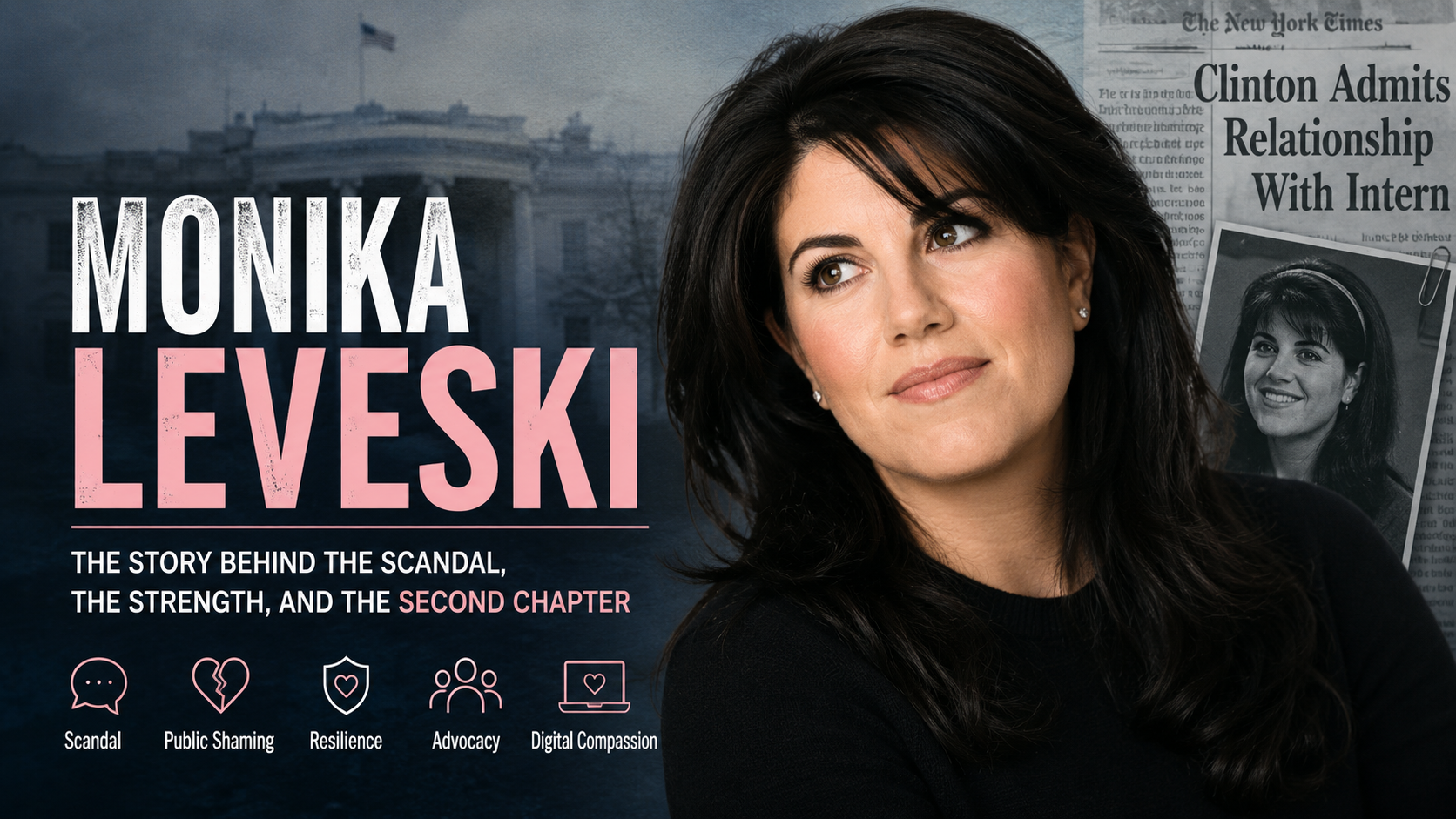
When people search for Monika Leveski (more commonly spelled Monica Lewinsky), they’re usually looking for more than just details about a political scandal. They’re often curious about the woman herself, what happened, and how her life evolved after becoming one of the most recognizable public figures of the late 1990s.
It’s a story that has changed dramatically over the years.
What was once viewed primarily as a political controversy is now also discussed as a case study in media culture, public shaming, online harassment, and personal resilience. And honestly… that shift says a lot about how society has changed.
Quick Facts About Monika Leveski
| Detail | Information |
|---|---|
| Full Name | Monica Samille Lewinsky |
| Birth Date | July 23, 1973 |
| Birthplace | San Francisco, California, USA |
| Profession | Activist, Writer, Public Speaker |
| Education | Lewis & Clark College, London School of Economics |
| Known For | Clinton-Lewinsky Scandal, Anti-Cyberbullying Advocacy |
| Current Focus | Public speaking, activism, digital safety awareness |
Monica Lewinsky was born in California and later graduated from Lewis & Clark College. She also earned a master’s degree in social psychology from the London School of Economics. Over the years, she has transformed her public image from scandal figure to respected advocate and speaker.
How Monica Lewinsky Became a Household Name
Back in the late 1990s, Monica Lewinsky was a White House intern. During that time, she became involved in a relationship with then-U.S. President Bill Clinton.
When news of the relationship became public in 1998, it sparked one of the biggest political scandals in American history. The controversy dominated television, newspapers, magazines, and — importantly — the growing internet. The events eventually contributed to Clinton’s impeachment proceedings.
For months, maybe even years, her name seemed impossible to avoid.
And while political figures had teams of advisors and legal experts around them, Lewinsky was just a young woman in her twenties suddenly facing worldwide scrutiny.
That distinction matters more today than many people realized at the time.
Living Through Public Humiliation
One reason Monica Lewinsky’s story continues to resonate is because she experienced something that feels very familiar in today’s social media age.
Millions of people discussed her, criticized her, mocked her, and judged her.
Long before Twitter, TikTok, Instagram, or Facebook became part of everyday life, Lewinsky found herself at the center of one of the internet’s earliest global pile-ons. Many commentators now describe her as one of the first major victims of large-scale online shaming.
At the time, few people were talking about mental health consequences, digital harassment, or online bullying.
Today, those conversations are everywhere.
Education and Life After the Scandal
After years of intense media attention, Lewinsky stepped away from public life for a period.
She moved to the United Kingdom and pursued higher education. In 2006, she completed a master’s degree in social psychology at the London School of Economics. Her academic work focused on how public opinion and media exposure can influence perceptions.
For a while, she largely avoided the spotlight.
And many people assumed they would never hear from her again.
But that wasn’t how the story ended.
Monica Lewinsky’s Return to Public Life
In 2014, Lewinsky re-emerged with a powerful essay discussing shame, survival, and the impact of public humiliation.
Rather than trying to erase her past, she chose to confront it directly.
That decision became a turning point.
Soon afterward, she began speaking publicly about cyberbullying, digital cruelty, and the importance of compassion online. Her message connected with many people who had experienced harassment themselves.
Key Areas of Her Advocacy
- Cyberbullying prevention
- Online harassment awareness
- Digital compassion
- Mental health support
- Reputation management
- Public shaming awareness
These topics have become central to her work as an activist and public speaker.
The “Patient Zero” of Online Harassment
One phrase often associated with Monica Lewinsky is “patient zero of online harassment.”
She has used this description to explain how her experience reflected the beginning of a new digital era where mistakes, rumors, and controversies could spread globally within hours.
Whether people agree with the label or not, her story illustrates how quickly public narratives can form online.
A single event became part of internet history.
And unlike traditional news cycles, digital content doesn’t simply disappear.
Anti-Bullying Campaigns and Public Work
Over the last decade, Lewinsky has partnered with multiple organizations focused on reducing online abuse and encouraging healthier digital behavior.
Some of her most recognized initiatives include:
- #ClickWithCompassion campaign
- Anti-cyberbullying public service announcements
- Work with Bystander Revolution
- Support for youth-focused anti-bullying organizations
- Public speaking on resilience and empathy
Her campaigns encourage people to think before posting hurtful comments and to support individuals facing online attacks.
Why Monica Lewinsky’s Story Still Matters
The world is different now.
Social media platforms have amplified both connection and criticism. People can become famous — or infamous — overnight.
That’s why Monica Lewinsky’s experience remains relevant.
Her story raises important questions:
- How should society treat people who make mistakes?
- What are the long-term effects of public shaming?
- Can people redefine themselves after controversy?
- How should online communities handle harassment?
There aren’t always simple answers.
But her journey has become an important reference point in conversations about internet culture, accountability, and empathy.
Lessons We Can Learn
Looking back, several lessons emerge from Monica Lewinsky’s experience:
- Public mistakes don’t have to define an entire life.
- Online words can have real-world consequences.
- Personal growth is possible even after intense adversity.
- Digital compassion matters more than many people realize.
- Society’s understanding of power dynamics continues to evolve.
These ideas have helped transform public perception of Lewinsky over time. What was once a story focused almost entirely on scandal is now frequently discussed through the lenses of resilience and advocacy.
Final Thoughts
The name “Monika Leveski” continues to attract attention decades after it first appeared in headlines. Yet the story has become much larger than a political controversy.
Today, Monica Lewinsky is known not only for a chapter of American political history but also for her efforts to combat cyberbullying, encourage online empathy, and help others navigate public shame.
It’s a reminder that people are more than their worst moments.
And sometimes, the most interesting part of a story isn’t the controversy itself — it’s what happens afterward.