
 By Admin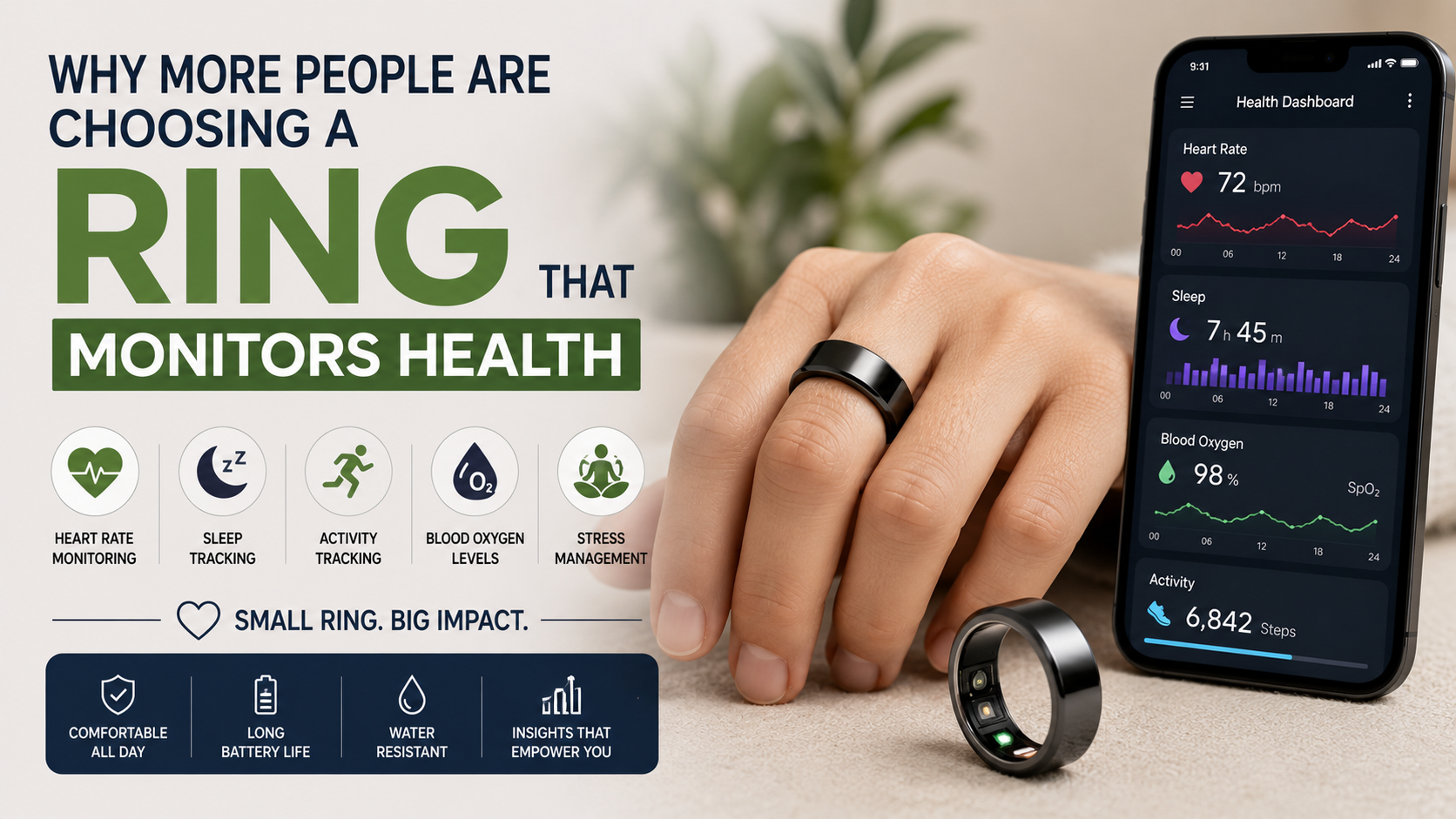
Wearable technology has moved fast over the last few years, and consumer habits have shifted right along with it. Smartwatches and fitness bands still have their fans, but a growing number of people are switching to a smart ring for one simple reason: it delivers serious health data without asking for much in return. No bulky screen, no constant charging, no learning curve — just a small, comfortable band that quietly keeps track of how your body is doing.
A Ring Built to Disappear on Your Finger
The biggest draw of a ring that monitors health is how little you notice it. Traditional wearables sit on the wrist, which can feel bulky during sleep, workouts, or a full day at a desk. A ring, by contrast, is small enough to forget about — which is exactly the point. When a device is genuinely comfortable, people actually keep it on, and that consistency is what turns scattered readings into a reliable, long-term picture of your health.
Monitoring That Happens in the Background
Modern smart ring pack a surprising amount of sensor technology into a tiny shell. Once it’s on your finger, it works without asking anything of you. Typical tracking includes:
- Sleep stages and duration
- Continuous heart rate
- Daily steps and activity levels
- Calorie estimates
- Recovery scores
- Stress signals on select models
None of this requires manual logging. The ring collects the data, and a companion app turns it into something you can actually read and act on.
Better Sleep, Backed by Real Data
Sleep quality shapes almost everything else about how you feel the next day, and a smart ring is particularly good at tracking it. By measuring movement and heart rate overnight, it can break sleep down into light, deep, and REM stages. Over a week or two, patterns start to emerge — maybe your deep sleep drops on nights you scroll your phone in bed, or your resting heart rate creeps up after a late dinner. That kind of feedback makes it much easier to adjust habits instead of guessing.
Heart Rate Insights Without the Guesswork
Because a ring stays in contact with your skin around the clock, it can track heart rate far more consistently than a device you only check occasionally. That steady stream of data is useful for spotting overtraining, gauging recovery after a hard workout, or simply noticing when stress is creeping up before it becomes obvious.
Encouraging Movement Without Nagging
Activity tracking is where a ring that monitors health quietly earns its keep. Steps, active minutes, and calories burned are all logged automatically, and most apps translate that into simple daily goals. It’s a low-pressure nudge — no buzzing alerts, no guilt trips — just a clear view of whether you moved enough that day.
Small Size, Long Battery Life
One practical advantage smart rings have over watches is battery life. Many models run for several days, sometimes closer to a week, on a single charge. Combined with their light weight, that makes them genuinely low-maintenance — you’re not tethered to a charger every night just to keep your data streak intact.
A Smarter Way to Buy Wearable Tech
Companies like Ringconn have helped push this category forward, building rings that combine accurate sensors, durable materials, and long battery life without locking key features behind a subscription. That matters, because a growing number of buyers are specifically looking for devices where the health insights they paid for don’t come with a recurring bill attached.
Final Thought
The appeal of a ring that monitors health comes down to a simple trade: less bulk, less friction, and just as much useful data as bigger wearables provide. From tracking sleep stages to keeping tabs on heart rate and daily movement, a well-made smart ring turns everyday habits into information you can actually use.